How Digitally Mature Are You - and Your Dental Practice?
By dentaiware · 2026-09-02
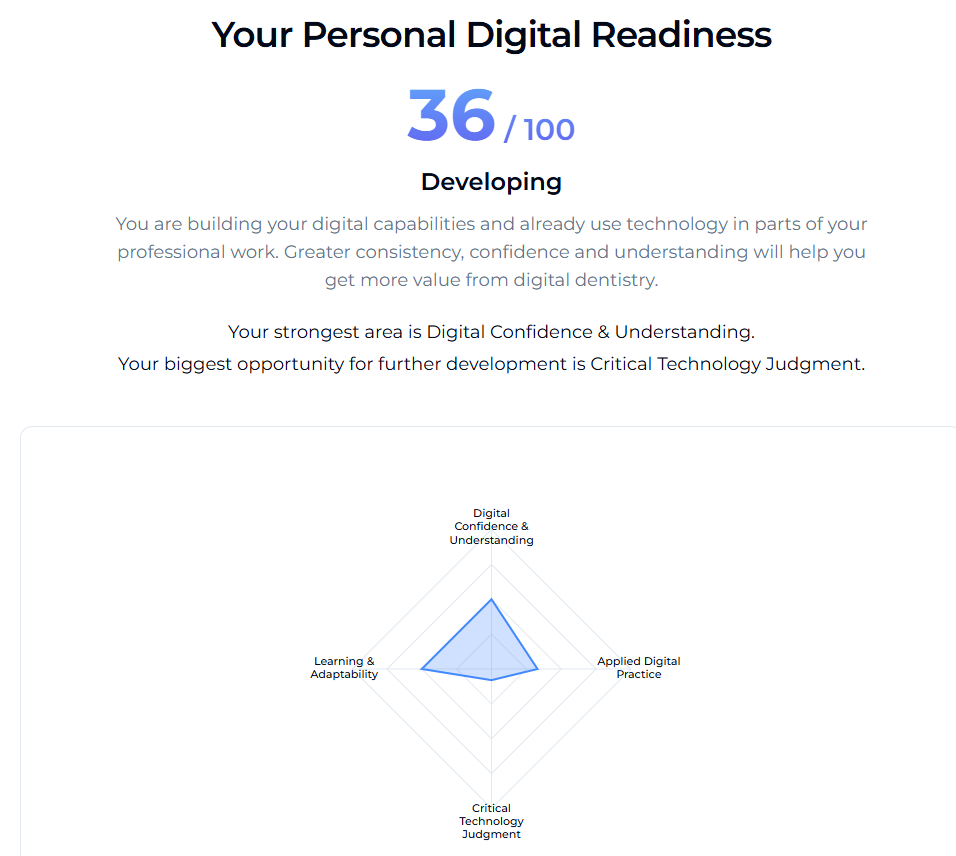
Digital maturity has two sides: how confidently dental professionals use technology, and how well a practice connects it. Assess both with dentaiware.
Digital dentistry is advancing quickly. Intraoral scanners, imaging software, practice management systems, patient communication platforms, AI applications and an increasing number of specialized digital tools are becoming part of everyday dentistry.
But digital maturity is not simply about how many technologies are available in a practice.
It has two complementary sides: the individual level and the practice level. One looks at how confidently and effectively dental professionals understand, evaluate and use digital technologies. The other looks at how effectively technology is implemented, connected and used across clinical, patient and operational workflows.
A highly digital clinic will struggle to realize the full value of its technology if the people using it are not confident, knowledgeable or engaged. At the same time, highly digitally capable individuals can only go so far if the systems and workflows around them remain fragmented.
That is why we created two complementary Digital Dentistry Maturity Assessments on dentaiware.
Personal Digital Readiness
The first perspective focuses on the individual dental professional.
Digital dentistry increasingly requires more than knowing how to operate a specific piece of equipment or software. Dental professionals are constantly confronted with new technologies, new terminology, new claims and new ways of working. This creates a broader capability requirement: understanding what is relevant, evaluating new tools critically and being able to apply digital technologies effectively in daily work.
The Personal Digital Readiness Assessment is designed to explore questions such as:
How comfortable are you with digital technologies?
How well do you understand the tools you use?
How confident are you in evaluating new solutions?
Can you distinguish meaningful innovation from attractive marketing?
How effectively do you integrate digital tools into your professional work?
How prepared are you for the next wave of digital development?
The purpose is not to test technical knowledge or determine whether someone is "good" or "bad" at digital dentistry. Instead, it provides a structured way to reflect on current readiness and identify areas where further knowledge, confidence or experience could help.
Clinic Digital Maturity
The second perspective moves from the individual to the practice.
Many dental practices already use a significant amount of technology. Yet the number of digital tools in a clinic says relatively little about how digitally mature that clinic actually is.
A practice may already use an intraoral scanner, digital radiography, online booking, cloud software and AI applications, while still relying on manual handovers, duplicated data entry or disconnected workflows. In that situation, the practice may be digitally equipped without being digitally mature.
The Clinic Digital Maturity Assessment therefore looks at how effectively technology is implemented and used across the organization. It considers questions such as whether systems are connected, whether digital workflows are consistently adopted by the team, whether technology improves the patient journey, and whether information moves efficiently between systems and people.
It also looks at broader organizational questions:
Are digital tools improving clinical and operational workflows?
Is the practice making effective use of its data?
Is there a clear approach to evaluating and introducing new technology?
Are digital processes consistent across the team?
Are systems working together or creating additional complexity?
The objective is to give practices a more holistic view of their digital setup and help identify where further development may create the most value.
Why Both Perspectives Matter
Digital transformation in dentistry is ultimately a combination of people, technology and workflows.
Technology alone cannot create digital maturity. A sophisticated system that nobody fully understands or consistently uses will deliver limited value. Similarly, digitally capable professionals working within fragmented systems and poorly designed workflows will constantly encounter barriers.
The strongest digital environments emerge when individual readiness and organizational maturity develop together.
This is also why the two assessments can reveal very different situations. A practice may discover that its technology infrastructure is relatively advanced while team confidence and adoption are lagging behind. Another practice may have a highly digitally engaged team but still rely on poorly integrated systems.
Those situations require very different next steps.
Understanding both sides creates a much clearer picture of where the actual opportunity for improvement lies.
Digital Maturity Is More Than Adopting New Technology
One of the easiest mistakes in digital transformation is to equate progress with adding more tools.
New technology can absolutely create value, but the next technology purchase is not always the next step toward greater digital maturity. In many cases, there may be more value in improving how an existing solution is used, training the team, connecting systems, standardizing a workflow or removing unnecessary complexity from the technology stack.
Digital maturity is therefore less about accumulating technology and more about using technology deliberately and effectively.
That distinction becomes increasingly important as the dental software landscape grows. There are now digital solutions for almost every part of the dental workflow, from patient acquisition and booking through diagnosis, treatment planning and clinical execution to payments, recall and patient communication.
The question is increasingly shifting from:
Which digital tools do we have?
to:
How well do our people, technologies and workflows work together?
From Individual Tools to Connected Workflows
Over the past years, much of digital dentistry has developed around solving individual problems. One technology helps acquire patients, another manages appointments, another supports diagnosis and yet another handles treatment planning or communication.
This has created enormous innovation, but it has also created fragmentation.
The next stage of digital development will increasingly be about connecting these individual solutions into more coherent workflows across the patient journey and the clinical environment. The value of technology grows when information can move more seamlessly and when one digital step naturally supports the next.
A connected patient journey might, for example, span:
Patient acquisition -> booking -> intake -> diagnosis -> treatment planning -> treatment -> payment -> recall and ongoing communication
For the individual dental professional, digital readiness means understanding how different technologies fit into their work and being able to use them effectively.
For the clinic, digital maturity means creating an environment in which those technologies work together rather than existing as isolated tools.
That connection between digital capability and digital infrastructure is at the heart of digital maturity.
Find Out Where You Stand
To provide a simple starting point, dentaiware now offers two Digital Dentistry Maturity Assessments.
The Personal Digital Readiness Assessment asks 12 questions and takes around five minutes. It assesses how confidently and effectively you understand, evaluate and use digital technologies in your professional work.
The Clinic Digital Maturity Assessment asks 20 questions and takes around eight minutes. It assesses how effectively technology is implemented, connected and used across the clinical, patient and operational workflows of your practice.
Both assessments are designed to provide a structured overview of current maturity and highlight areas where further development may be worthwhile.
There is no single ideal level of digital maturity and no technology stack that is right for every dental professional or every practice. The right digital setup will always depend on factors such as the type of practice, treatment mix, team, existing systems, patient expectations and strategic priorities.
But understanding where you are today makes it much easier to decide where to go next.