Dental AI is an Amplifier, not a Miracle
By dentaiware · 2026-06-22
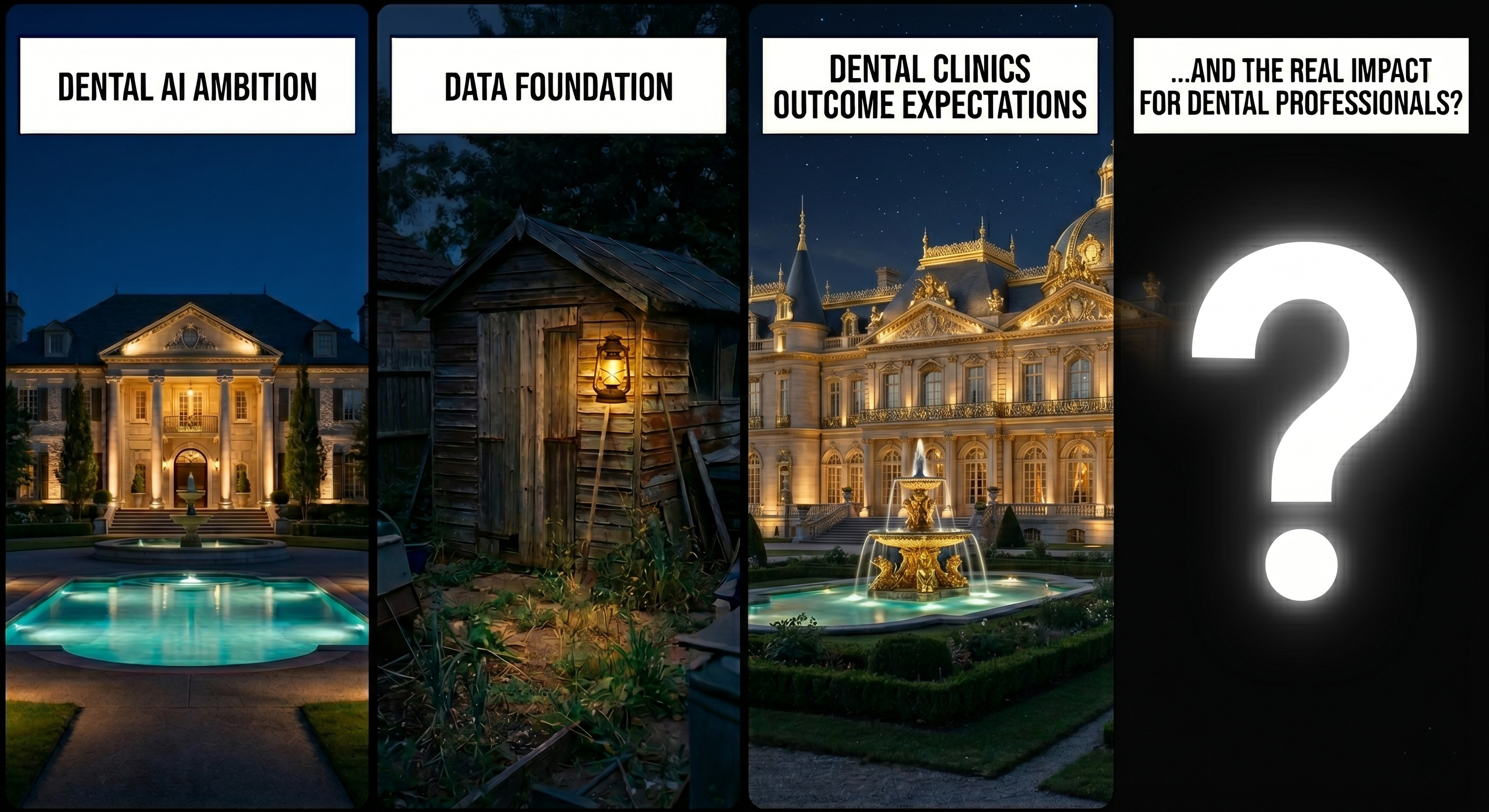
AI in dentistry creates the most value when layered on top of strong data quality, connected digital workflows, and engaged teams. Without those foundations, AI magnifies weakness instead of creating advantage.
Since I started building up dentaiware I see basically every week a new AI solution that enters dentistry. Promises of better diagnosis, improved scheduling, streamlined administration, and higher efficiency dominate conversations across the industry. The excitement is understandable. But one message stood out to me during the ADSO Summit in Chicago last week:
AI in dentistry creates the most value when it is layered on top of strong data quality and (digital) clinical workflows. In other words, AI is an amplifier, not a miracle.
Technology alone doesn't create excellence
Many practices and DSOs are asking themselves which AI solution they should implement next. Yet this may not be the most important question. A better question is whether the foundation already exists to allow AI to create value.
Artificial intelligence cannot compensate for disconnected software systems, poor data quality, inefficient processes, or disengaged teams. It simply magnifies whatever is already there. Strong foundations become stronger. Weak foundations become more visible and new tools are simply prone to fail.
The layers beneath AI
Most people only see the AI layer but the actual work happens underneath.
Digital workflows are the first prerequisite. Scheduling, imaging, practice management software, patient communication, and other clinical and back-office systems should work together before another layer of intelligence is added. Connected workflows create leverage, while disconnected systems create friction.
Data quality is equally important. Even the most sophisticated algorithms depend on reliable information. Incomplete records, inconsistent coding, and isolated systems limit what AI can achieve. The old principle still applies: garbage in, garbage out.
Processes matter just as much. Technology cannot compensate for broken workflows. Case acceptance, recalls, treatment planning, referrals, and patient communication all require clear and repeatable processes before automation can improve them.
Finally, people and culture remain the ultimate differentiator. Successful technology adoption depends far more on engaged clinicians, aligned teams, and strong leadership than on algorithms. Technology might enhance culture, but it cannot replace it. The real value of implementing AI automation tools is to free up additional high-quality time between dental professionals and their patients.
AI creates value when the foundation is strong
When the fundamentals are in place, AI becomes a powerful force multiplier. It can improve patient acquisition, optimize scheduling, support diagnosis and treatment planning, automate documentation, strengthen patient communication, and increase operational efficiency. These capabilities are impressive, but they are not the source of sustainable advantage on their own.
The real advantage comes from combining technology with excellent execution.
The practices with simply more AI tools are not necessarily the ones that will attract and retain most patients
AI is becoming accessible to everyone. Over time, access to technology itself will matter less. What will separate the most successful dental clinics from the rest will be their ability to integrate AI into strong systems, reliable processes, and a culture that embraces change.
Because in the end, AI is not the strategic advantage. Execution is and will be the biggest differentiator for dental clinics.