Before You Buy AI, Fix Your Workflow
By dentaiware · 2026-07-06
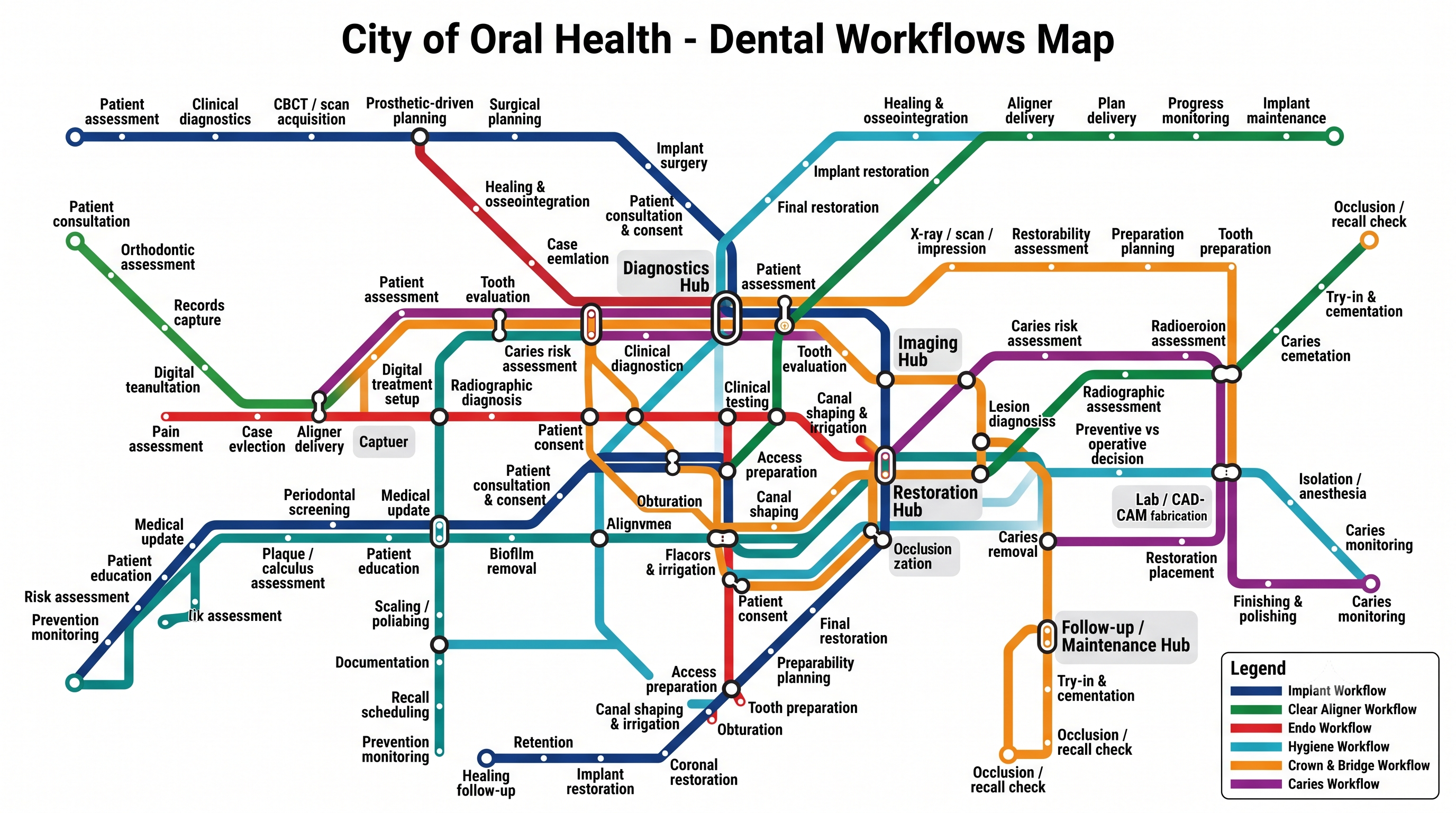
AI does not fix broken workflows in dentistry — it makes them more visible. Learn why mapping your workflow should come before selecting any AI tool.
AI is one of the most exciting topics in dentistry right now. It can support diagnosis, automate documentation, improve patient communication, help with treatment planning, streamline administrative work, and create new insights from clinical and operational data.
But there is one important truth that often gets overlooked: AI does not fix broken workflows. In many cases, it simply makes them more visible.
Before a dental clinic, DSO, or lab invests in AI, it should first understand the workflow it wants to improve. The real question is not "Which AI tool should we buy?" The better question is "Which problem are we trying to solve?"
Start with the workflow, not the technology
Many teams start their AI journey with a demo. The tool looks impressive, the interface is clean, the output is fast, and the promise sounds convincing. But after implementation, reality can look very different.
The team may still need to upload files manually. The findings may not be connected to the patient record. The treatment coordinator may not use the output. The clinician may not fully trust the result. The assistant may see it as one more system to manage. The data may not flow into reporting.
Suddenly, the AI tool is not a productivity boost. It is another digital island. This is why workflow mapping should come before software selection.
Understand the current process first
Before buying AI, dental teams should take a step back and look honestly at the current process. How does a new patient move from booking to diagnosis? How are X-rays reviewed, discussed, and documented? How is a treatment plan created and explained? How does a case move from clinic to lab? How are patients followed up after they leave the practice?
These questions are simple, but they are powerful. They show where time is lost, where information is duplicated, where communication breaks down, and where the team is forced to compensate for missing connections between systems.
This is where AI can create real value. Not by being impressive in isolation, but by improving a specific part of the workflow.
AI works best when the basics are clear
Good AI implementation needs more than a good algorithm. It needs clear roles, clean data, defined processes, and team adoption.
Who uses the AI output? When is it reviewed? Where is it stored? How is it explained to the patient? Who is responsible for the final decision? What happens if the result is unclear or wrong? How is success measured?
Without clear answers, even a strong AI tool can disappoint. The problem is not necessarily the technology. The problem is that the organization was not ready to use it properly.
Look for friction, not features
When evaluating AI, it is easy to focus on features. Does it detect caries? Does it segment teeth? Does it generate notes? Does it answer patient questions? Does it create reports?
These questions matter, but they are not enough. The more important question is: where does this reduce friction?
A useful AI tool should save time, reduce manual work, improve consistency, help patients understand treatment, support better documentation, or make the next step easier for the team. The output itself is only part of the value. The real value comes from what happens around that output.
The people-process-technology triangle
Successful AI adoption usually sits at the intersection of people, process, and technology.
The people need to understand the tool, trust it, and know how to use it in daily work. The process needs to be clear enough for AI to support it without creating confusion. The technology needs to be reliable, integrated, secure, and suited to the actual use case.
If one side of this triangle is missing, adoption becomes difficult. Great technology without team adoption will not scale. Motivated people without a clear process will improvise. A strong process without the right tools will remain manual.
AI works best when all three are aligned.
A practical way to start
Before buying an AI tool, choose one workflow and map it honestly. Not the ideal version, but the real version.
For example, look at the journey from X-ray taken to treatment explained. Or from scan captured to lab case submitted. Or from missed call to appointment booked. Or from completed exam to clinical note finalized.
Then ask where time is lost, where information gets stuck, where patients get confused, where the team repeats work, and where errors happen. This does not need to be a complex consulting project. It can start with a whiteboard, a few team members, and one specific process.
The more specific the workflow, the easier it becomes to evaluate whether AI can help.
The practical takeaway
AI can be powerful in dentistry, but it is not magic. It does not automatically create better workflows, cleaner data, happier teams, or better patient communication. Those things need to be designed.
The best AI projects start before the software is purchased. They start with understanding the problem, mapping the workflow, involving the team, and defining what success should look like.
Because in the end, the goal is not to "use AI." The goal is to make dental care more efficient, more consistent, and more human.
And that starts with fixing the workflow.